When Flat Meets Formal: How American Volunteers Learn to Work Within European Nonprofit Hierarchies
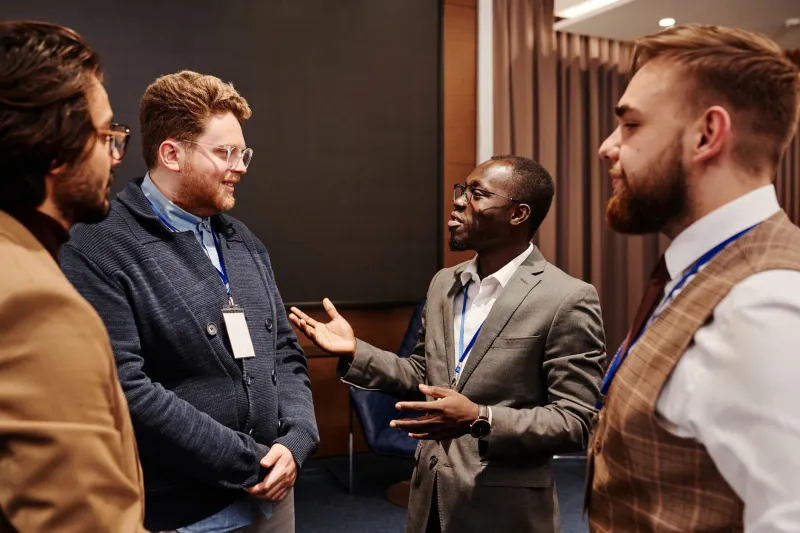
There is a particular moment that many American volunteers describe in almost identical terms. They are sitting in a team meeting at a nonprofit in Warsaw, or Lisbon, or Ljubljana, and they have an idea—a good one, they believe—so they say it out loud, directly, with the confident informality that feels entirely natural back home. The room goes quiet. A senior staff member offers a thin smile. The meeting moves on. The idea is never mentioned again.
What happened in that room was not hostility. It was a collision of organizational cultures so deeply ingrained that neither party fully recognised it as it occurred.
For Americans volunteering across the European Union, navigating the internal power structures of nonprofit organisations is one of the least-discussed challenges of international service—and one of the most consequential.
The Architecture of Authority in European Nonprofits
To understand why these moments of friction arise, it helps to understand how authority tends to be structured in many European civil society organisations. Across much of Central, Eastern, and Southern Europe in particular, nonprofits retain a strongly hierarchical character. Decisions flow downward from executive directors or board-level leadership. Staff members at mid and junior levels are expected to execute rather than initiate. Public disagreement with a supervisor—even gentle, well-intentioned disagreement—can be read not as intellectual engagement but as a challenge to institutional order.
This is not a universal rule. Nordic nonprofits, for instance, tend to operate with considerably flatter structures, and organisations in the Netherlands or Denmark may feel surprisingly familiar to Americans. But even within countries, there is enormous variation depending on the organisation's age, funding sources, and leadership philosophy.
What is consistent is this: the assumptions that American volunteers carry into their placements—that good ideas should be voiced regardless of rank, that leadership should be accessible and informal, that consensus-building is a sign of organisational health—are not universally shared. In many European contexts, those same behaviours can register as presumptuous, disruptive, or simply odd.
Reading the Room Before You Speak
Experienced volunteers who have navigated these environments successfully tend to describe a common first step: observation before participation. Rather than arriving with an agenda, they spend their initial weeks mapping the social and professional landscape of the organisation.
Who defers to whom in meetings? Who speaks last, and does that person's word tend to close discussion rather than open it? Are staff members on a first-name basis with leadership, or is there a formality to address that signals distance? Do volunteers see colleagues going directly to the director with questions, or do requests travel through intermediaries?
These are not trivial details. They are the grammar of an organisation's culture, and misreading them early can create impressions that are difficult to reverse.
One practical strategy that volunteers frequently recommend is the private conversation before the public proposal. Rather than raising an idea in a group setting—where it may be perceived as a bid for visibility—bringing it first to a direct supervisor or trusted colleague allows the idea to be vetted, contextualised, and, if appropriate, advanced through proper channels. It is a slower process than Americans are often comfortable with. It is also frequently more effective.
The Difference Between Influence and Imposition
There is a meaningful distinction between a volunteer who adapts to a system in order to work effectively within it and one who simply abandons the perspectives they bring. The most impactful American volunteers in European nonprofits are not those who fully assimilate—erasing every instinct they arrived with—but those who learn when and how to deploy those instincts strategically.
American professional culture genuinely does carry strengths that many European organisations lack: a comfort with direct feedback, an orientation toward measurable outcomes, an ease with cross-functional collaboration. These are assets. But they become liabilities the moment they are applied without cultural translation.
Consider feedback. In many American workplace contexts, offering constructive criticism to a colleague or even a supervisor is a sign of professional respect. In organisations where hierarchy is deeply embedded, the same act can feel like an affront. The solution is not to stop thinking critically. It is to find the appropriate moment, the appropriate audience, and the appropriate framing—often one that centres the organisation's mission rather than the individual's shortcomings.
When the System Needs Changing—And You Are Not the One to Change It
Perhaps the most difficult lesson for American volunteers is accepting the limits of their role. Many arrive motivated by a genuine desire to improve the organisations they serve. Some come from backgrounds in consulting, advocacy, or organisational development, and they can see, with relative clarity, where a nonprofit's processes are inefficient or its culture is inhibiting growth.
Seeing a problem and having the standing to address it are two different things. A volunteer who has been in place for three months does not have the relational capital, the institutional knowledge, or frankly the authority to restructure how an organisation makes decisions—regardless of how sound their analysis may be.
This is not a counsel of passivity. It is a counsel of proportion. Small, well-placed contributions—a more rigorous reporting template, a better system for tracking volunteer hours, a reframed grant narrative—can accumulate into genuine institutional change over time. The volunteer who plants those seeds quietly, without demanding credit or urgency, often leaves a more durable mark than one who arrives with a transformation agenda.
Building Trust Across the Hierarchy
Relationships, in hierarchical organisations, are not incidental to effectiveness—they are the mechanism through which effectiveness becomes possible. American volunteers who invest time in understanding the personal and professional contexts of their colleagues, particularly those in senior positions, tend to find that the formal structures they initially encountered gradually become more permeable.
This requires patience with a pace of relationship-building that may feel slower than what Americans are used to. European professional culture in many contexts does not rush toward familiarity. Trust is extended incrementally, and it is earned through demonstrated reliability and discretion rather than through charisma or initiative alone.
For volunteers who stay long enough—and for those who return to the same organisation across multiple placements—these investments compound. Relationships built carefully over months can translate into a level of informal influence that no organisational chart would suggest was available.
Carrying the Experience Home
There is an irony worth noting. The American volunteers who struggle most with European nonprofit hierarchies often return home having developed a more nuanced understanding of their own organisational culture—its strengths, its blind spots, and the ways in which its apparent flatness can mask its own forms of informal power.
The friction of working inside a system that does not match your assumptions is, in its own way, an education. It sharpens the capacity to read rooms, to sequence ideas strategically, and to distinguish between the change you want to make and the change you are positioned to make.
For organisations seeking to connect American volunteers with European nonprofits thoughtfully, pre-departure preparation that addresses these dynamics explicitly—not just visa logistics and packing lists—is among the most valuable investments they can make. The volunteers who arrive informed are not only more effective. They are more likely to be welcomed back.