Not All EU Doors Open Equally: The Hidden Variables Behind American Volunteer Visa Outcomes
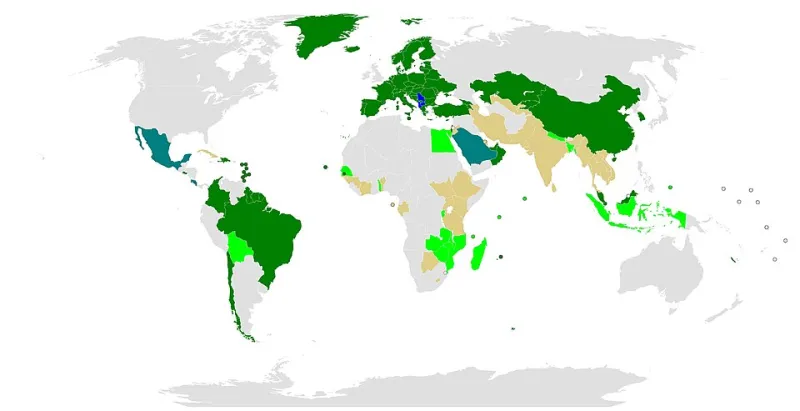
Photo: Archialsta, CC BY-SA 4.0, via Wikimedia Commons
For many Americans, the decision to volunteer in Europe feels like the hardest part of the process. Find an organization, secure a placement, book a flight. Simple enough in theory. What far fewer applicants anticipate is that the visa process itself can be the most consequential variable of all—and one that operates with startling inconsistency depending on where in the EU they intend to serve.
The European Union does not maintain a single, unified volunteer visa framework. What exists instead is a collection of national-level policies that are loosely informed by EU directives, significantly shaped by domestic immigration priorities, and applied with varying degrees of rigor by consular staff who exercise considerable discretionary authority. For American volunteers, this means that two people with nearly identical profiles, applying to nearly identical placements, can arrive at dramatically different outcomes simply because one is heading to Lisbon and the other to Warsaw.
A Framework Built on Variation
The EU's Long-Term Residents Directive and various bilateral arrangements provide a broad scaffolding, but the practical experience of applying for volunteer status—whether through a dedicated volunteer visa, a national D-visa, or a residency permit tied to a recognized service program—varies substantially across member states.
Countries such as Germany, Portugal, and the Netherlands have developed relatively structured pathways for international volunteers, particularly those affiliated with recognized nonprofit organizations or established European Voluntary Service successor programs. These countries tend to have clearer documentation requirements, faster processing timelines, and consular staff who are more accustomed to handling volunteer-specific applications.
By contrast, several Central and Eastern European member states—including some that actively welcome international volunteers at the organizational level—have not yet developed equally streamlined administrative procedures. Applicants in these cases may encounter consular offices that default to standard visa categories ill-suited to volunteer arrangements, resulting in requests for additional documentation, extended processing periods, or outright denials that have less to do with the applicant's eligibility than with institutional unfamiliarity.
What Consular Officers Are Actually Evaluating
Beyond the formal checklist of required documents, consular officers across EU member states are making judgment calls informed by criteria that are rarely published anywhere.
One dimension that recurs consistently in the accounts of successful applicants is the demonstrable legitimacy of the host organization. Nonprofits that are formally registered, financially transparent, and affiliated with recognized EU-level networks tend to generate significantly less friction for their volunteers during the visa process. An invitation letter from a small, informal community group—however genuine the work—does not carry the same institutional weight as documentation from an organization with an established track record of hosting international volunteers.
A second factor is the coherence of the applicant's narrative. Consular officers are, in effect, assessing whether the stated purpose of the visit is credible. Americans who can clearly articulate the scope of their service role, the duration of their commitment, and the specific contribution they will make to the host organization's work tend to move through the process more smoothly than those presenting vague or generalized descriptions of their intentions.
Financial self-sufficiency documentation is a third variable that is weighted differently across member states. Some countries require evidence that the volunteer can support themselves without drawing on local social services; others are satisfied with a letter from the host organization confirming that accommodation and a stipend will be provided. Applicants who arrive at the consulate without clarity on which standard applies to their destination country frequently encounter delays that could have been avoided.
The Countries Where the Process Tends to Move Faster
Among EU member states, Portugal has earned a notable reputation among American volunteers for consular efficiency and organizational clarity. The country's growing nonprofit sector, combined with national immigration policies that have been deliberately recalibrated to attract international talent and service workers, has created an environment where volunteer visa applications are handled with relative consistency.
Germany, despite its reputation for administrative thoroughness, has developed well-documented procedures for volunteers affiliated with recognized service organizations, and applicants who prepare complete files report predictable timelines. The Netherlands similarly benefits from a consular culture that is accustomed to processing diverse international applications, with staff who are more likely to have encountered volunteer visa requests before.
Spain and France occupy a middle tier—more experienced than many Eastern European counterparts, but subject to regional variation in how individual consulates interpret national policy. Americans applying through Spanish or French consulates in major U.S. cities may have meaningfully different experiences than those applying through consulates in smaller metropolitan areas.
Where Applicants Encounter the Most Friction
The most common source of difficulty is not outright rejection but procedural ambiguity—a request for a document that does not obviously exist, or a requirement framed in terms that do not map cleanly onto American administrative conventions. This is particularly common in countries where the volunteer visa category is newer or less frequently used.
Applicants heading to placements in Hungary, Bulgaria, or Romania have reported that consular staff occasionally direct them toward tourist visa categories or long-stay visas designed for other purposes, simply because the officer handling the application has limited familiarity with volunteer-specific provisions. In these cases, persistence—combined with documentation that explicitly references the relevant national or EU legal framework—has proven effective, though it places a burden on the applicant that their counterparts applying to more experienced consulates do not face.
Practical Strategies for Navigating the Inconsistency
The single most effective step an American volunteer can take before beginning the visa process is to contact the host organization directly and ask for documentation that has worked for previous international volunteers. Organizations that have successfully hosted Americans before will have templates, precedents, and institutional knowledge that can substantially reduce processing friction.
Applicants should also research the specific consulate—not just the country—through which they will be applying. The U.S. consular district matters less than the EU member state's consulate in the applicant's region, and firsthand accounts from others who have applied through that office are more reliable than general country-level guidance.
Engaging a legal professional or immigration advisor with specific EU volunteer visa experience is worth considering for placements in countries with less-developed procedures. The cost of a consultation is modest relative to the cost of a delayed or denied application.
Finally, timeline planning is essential. Processing times across EU member states range from two weeks to several months, and applicants who build insufficient lead time into their planning frequently find themselves in difficult positions. Beginning the process at least three to four months before an intended departure date provides meaningful buffer against the unpredictability that characterizes this landscape.
The Larger Picture
The inconsistency in EU volunteer visa outcomes is not a reflection of ill intent on the part of member state governments. It is, more accurately, a reflection of a policy area that has not yet matured to the point of genuine harmonization. For American volunteers navigating this landscape, the practical implication is that destination country selection carries more weight than many realize—and that thorough preparation, applied strategically to the specific requirements of the target country, remains the most reliable path to a successful outcome.