The Year I Spent Volunteering in Europe Changed Everything—And Not in the Ways I Expected
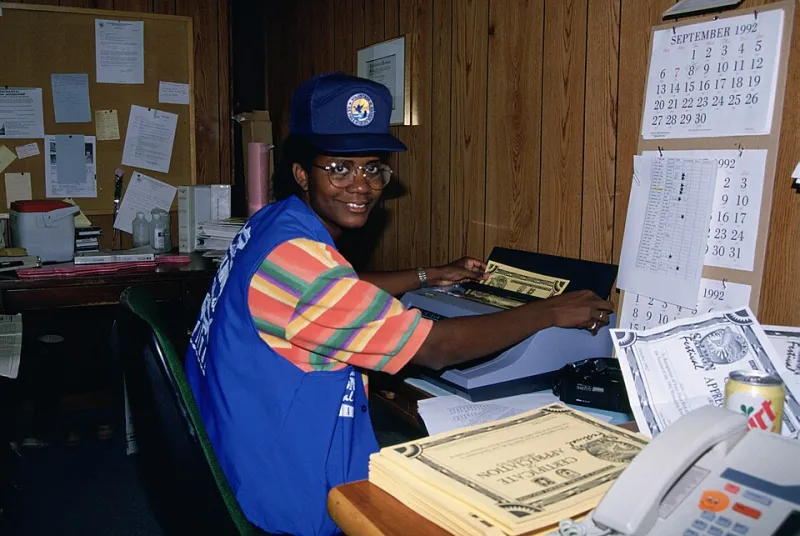
Photo: Department of the Interior. U.S. Fish and Wildlife Service. National Conservation Training Center. 10/1997-8888, Public domain, via Wikimedia Commons
There is a particular kind of photograph that circulates endlessly on social media: an American volunteer, beaming, surrounded by children or wildflowers or crumbling medieval architecture, caption reading something like "Living my best life while giving back." It is not dishonest, exactly. Those moments exist. But they represent perhaps three percent of what long-term volunteering in Europe actually looks like—and the other ninety-seven percent deserves a serious conversation.
This is that conversation.
The Financial Reality Nobody Puts in Their Bio
Let's begin with money, because almost every other challenge of sustained international volunteering connects back to it in some way.
Long-term EU volunteer programs—placements lasting three months to a full year—typically offer what is described as a "living allowance" or "pocket money." In practice, this ranges from roughly €150 to €500 per month depending on the country, the organization, and the specific program structure. Housing and meals are generally provided by the host organization, which mitigates the largest costs. But what remains is a financial reality that many Americans, accustomed to earning a salary, find genuinely disorienting.
There are phone bills, transportation costs for weekend travel, the occasional dinner out that preserves your sanity, and—critically—student loan payments, credit card minimums, and other American financial obligations that do not pause because you have relocated to Łódź or Thessaloniki. Before committing to a long-term placement, volunteers must conduct an honest audit of their fixed financial obligations at home. Many find that a year of European service requires liquidating savings, negotiating income-driven repayment plans, or relying temporarily on family support. None of these options are shameful, but all of them require planning.
Organizations matched through platforms like EU Volunteer Portal are transparent about stipend structures during the application process. Volunteers who ask direct financial questions early—and receive clear answers—are far better positioned than those who discover the limitations only after arrival.
The Emotional Architecture of Staying
Short-term volunteers often describe their experience in terms of what they accomplished: the houses built, the meals served, the children tutored. Long-term volunteers speak differently. After several months in a placement, the work becomes less about discrete achievements and more about relationships—with colleagues, with beneficiaries, with the texture of daily life in a culture not your own.
This shift is profound, and it is also where the emotional difficulty concentrates.
Homesickness, for one, is almost universally underestimated. It does not typically arrive as acute grief in the first week. It arrives quietly, around month two or three, as a low-grade ache triggered by mundane things: a holiday you're missing, a friend's wedding viewed through a phone screen, the specific way American grocery stores smell. Experienced volunteer coordinators at EU nonprofits recognize this pattern and structure programming to support volunteers through it. But volunteers should enter long placements with a realistic expectation that this difficulty is coming, not as a sign of failure, but as an ordinary feature of meaningful displacement.
There is also the challenge of being perpetually an outsider—not in the dramatic sense, but in the accumulation of small moments when your cultural references don't land, when your language skills plateau frustratingly, when you cannot fully participate in the social fabric of your host community. This experience generates genuine humility, which is valuable. It also generates loneliness, which is hard.
Cultural Integration: The Slow, Unglamorous Work
American volunteers often arrive with an implicit assumption that enthusiasm and goodwill are sufficient currency for cultural integration. They are necessary, but they are not sufficient.
European nonprofit cultures vary dramatically by country and by organization. In some contexts, hierarchy is respected and decisions flow from senior leadership; in others, flat organizational structures make consensus-building the norm. Communication styles that read as confident and direct in an American workplace can register as brash or impatient in certain European contexts. The reverse is also true: an organizational culture that prizes deliberation and process can frustrate Americans accustomed to faster iteration.
None of these differences are insurmountable, but they require active attention. The volunteers who integrate most successfully are those who approach their host culture with genuine curiosity rather than comparative judgment—who ask why things are done a certain way before suggesting how they might be done differently.
Language acquisition, even at a functional level, dramatically accelerates this integration. Learning to conduct even basic conversations in the local language signals respect and opens social doors that remain firmly closed to those who rely entirely on English. This is not a moral judgment; it is simply an observation about how trust is built.
What the Work Actually Looks Like on a Tuesday
The Instagram post version of European volunteering features weekend markets and cathedral visits. The Tuesday version features administrative tasks, repetitive program delivery, organizational meetings conducted partially in a language you're still learning, and the slow, patient work of building trust with community members who have seen many volunteers come and go.
This is not a criticism—it is a description of what sustained, genuine community service looks like. The organizations that benefit most from long-term volunteers are those that can assign meaningful recurring responsibilities: curriculum development, case management support, communications work, program coordination. These roles require time to learn and time to execute well. They are not photogenic. They are consequential.
Volunteers who approach long-term placements seeking adventure will likely find it—Europe is extraordinary—but those who approach them seeking purpose will find something more durable.
The Transformation That Doesn't Translate to a Caption
Here is what long-term European volunteering does that a two-week placement cannot: it changes your baseline assumptions about how society can be organized, how communities can function, and what you are actually capable of.
Volunteers who spend a year working with EU nonprofits return to the United States with perspectives on healthcare access, urban planning, civic participation, and social safety nets that are not theoretical. They have lived inside different systems. They have seen what works and what doesn't, at a granular level, in a specific community. They have been changed by it.
They have also, in most cases, contributed something real. Not a highlight reel of charitable moments, but months of consistent, reliable, professional-quality service that supported organizations doing difficult work with limited resources.
That transformation—personal and communal—is the actual return on investment of long-term volunteering. It does not fit neatly into a social media post. It fits, instead, into the way you think, the work you choose, and the person you become after you've stayed long enough to see what staying actually means.