Invisible No More: How American Volunteers With Marketing Backgrounds Are Transforming How European Nonprofits Compete for Attention and Resources

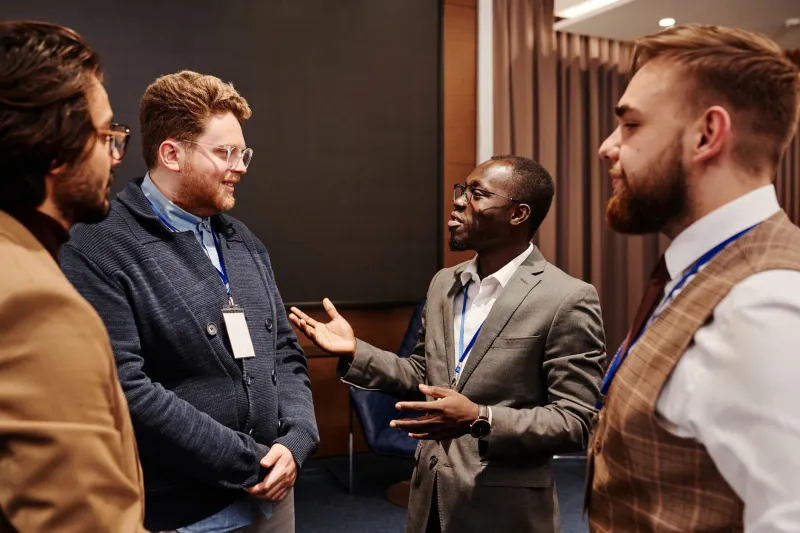
Photo: nonprofit marketing team Europe diverse volunteers working together strategy, via www.trainingjournal.com
There is a particular kind of frustration that settles over a nonprofit leader who knows their organization is doing exceptional work but cannot seem to get anyone outside their immediate community to notice. Across the European Union, this frustration is not rare. It is, in fact, endemic to a sector that has historically treated marketing as an afterthought—or worse, as something unseemly for mission-driven organizations to pursue too aggressively.
That cultural hesitation has consequences. And increasingly, American volunteers with backgrounds in sales, marketing, and fundraising are arriving at EU nonprofits to find organizations that are functionally invisible: no coherent digital presence, no donor pipeline, no narrative strategy, and no real understanding of why those things matter.
What happens next is quietly becoming one of the more significant dynamics in transatlantic volunteer exchange.
The European Marketing Gap Is Structural, Not Accidental
To understand why this gap exists, it helps to understand how many European nonprofits are funded. In several EU member states, civil society organizations have historically relied on government grants, municipal subsidies, or large institutional funders rather than individual donor campaigns. When your primary revenue source is a government contract or a foundation grant, you do not necessarily need to cultivate a public profile. You need to satisfy reporting requirements and maintain relationships with a small number of institutional decision-makers.
This model worked reasonably well for decades. But the landscape has shifted considerably. Government budgets have tightened across much of the continent. Institutional funders are increasingly asking organizations to demonstrate public legitimacy and community reach before committing resources. And the rise of crowdfunding, social enterprise, and cause-related consumer behavior has created entirely new funding channels that European nonprofits are often ill-equipped to access.
The organizations that are struggling most are not those doing poor work. They are, in many cases, those doing excellent work that no one outside a narrow institutional circle knows about.
What American Volunteers Are Actually Bringing
American professionals who come to EU volunteer placements with backgrounds in marketing, sales, public relations, or development fundraising carry a set of assumptions that European nonprofit staff often find surprising—and then invaluable.
The most fundamental of these is the assumption that an organization's story is a strategic asset that must be actively managed. American marketing culture, for all its excesses, has produced generations of professionals who understand that visibility does not happen by accident and that donor relationships require the same deliberate cultivation as any other relationship. This is not a controversial idea in the US nonprofit sector. In many EU organizations, it is genuinely revelatory.
Volunteers who arrive with these skills are frequently asked to take on projects that might seem modest on the surface—rewriting a website, developing an email newsletter, creating a social media calendar—but that carry outsized organizational significance. In several cases reported through EU Volunteer Portal placements, volunteers with marketing backgrounds have helped organizations secure new donor relationships simply by making their work legible to audiences outside the sector.
Beyond digital presence, American volunteers with sales experience are contributing something less obvious but equally important: a comfort with asking. Many European nonprofit cultures carry an implicit discomfort with direct solicitation. American fundraising culture, by contrast, has normalized the ask in ways that translate directly into donor development skills. Volunteers who can model this behavior—and coach staff through it—are providing something that no grant can purchase.
The Skills That Transfer Most Directly
Not every marketing skill set translates equally well across the Atlantic. Understanding which competencies are most immediately applicable helps prospective volunteers assess their own potential contribution.
Donor communications and email strategy are among the highest-value skills American volunteers bring. Many EU nonprofits have email lists they have never meaningfully used. Volunteers who understand segmentation, open rate optimization, and donor stewardship sequences can produce measurable results within a single placement period.
Content strategy and storytelling are similarly high-impact. American marketing professionals are trained to identify narratives that resonate with specific audiences and to translate organizational complexity into accessible human stories. This skill is directly applicable to grant writing, impact reporting, and public communications.
Digital advertising and search visibility represent an area where many EU nonprofits are starting from near zero. American volunteers with experience in Google Ads—particularly Google's Ad Grants program for nonprofits, which is available to eligible organizations globally—can help organizations reach audiences they currently have no mechanism to access.
Major donor cultivation and relationship mapping are skills that transfer well but require cultural sensitivity. The mechanics of identifying and nurturing high-capacity donors are similar across markets; the interpersonal approach requires calibration.
Why This Matters for Volunteers Considering a Placement
For American professionals weighing a volunteer placement in Europe, the marketing skills gap represents something more than an opportunity to be useful. It represents a chance to take on genuinely senior-level strategic responsibility in ways that may be difficult to access at an equivalent career stage in the United States.
EU nonprofits that lack marketing infrastructure are not looking for someone to execute a pre-existing strategy. They need someone who can assess the situation, develop the strategy, and build the capacity for the organization to sustain it after the volunteer departs. That is a leadership challenge, and it is one that produces the kind of portfolio evidence and professional growth that is difficult to replicate in a conventional employment context.
For organizations, the calculus is similarly compelling. An American volunteer with a strong marketing background represents access to skills that would otherwise require a significant financial investment to acquire—investment that many EU nonprofits simply cannot make.
The Responsibility That Comes With the Opportunity
It would be a mistake to frame this entirely as a one-directional transaction. American volunteers who arrive with marketing expertise have a genuine responsibility to transfer knowledge rather than simply execute tasks. The goal of any effective placement is to leave the organization more capable than it was before—not more dependent on the next visiting volunteer to maintain what was built.
This means documenting processes, training staff, and designing systems that can be sustained without specialized outside expertise. It means resisting the temptation to build something impressive but fragile. And it means approaching the work with the humility to recognize that organizational culture, community relationships, and institutional history are forms of knowledge that the host organization holds and the volunteer does not.
The marketing gap in European nonprofits is real, and it is consequential. American volunteers with the right skills have a meaningful role to play in closing it. The organizations that benefit most from these placements will be those where volunteers arrive prepared to build lasting capacity—not just temporary visibility.