Not All EU Welcome Mats Are Created Equal: A Country-by-Country Guide to Volunteer Visa Realities for Americans
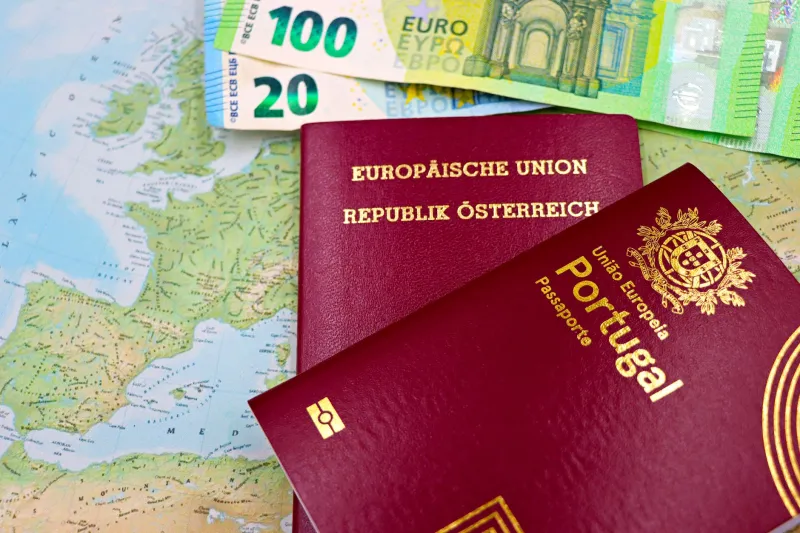
For many Americans preparing to serve abroad, the European Union presents itself as a unified destination—a single bloc with shared values, open internal borders, and, presumably, consistent rules. That assumption tends to survive right up until the moment a volunteer visa application lands on the desk of a consular officer in Warsaw, Lisbon, or Vienna. What happens next depends heavily on which country's desk that happens to be.
The reality is that EU member states retain substantial individual authority over their immigration frameworks, and volunteer visa policies are no exception. While broad EU directives provide a loose structural foundation, the specific documentation required, the processing timelines involved, and the informal standards applied by individual consulates vary enough to produce wildly different outcomes for American applicants who are, on paper, attempting to do exactly the same thing.
Understanding these variations is not merely academic. For American volunteers and the European nonprofits that host them, the country-by-country landscape can mean the difference between a placement that proceeds smoothly and one that collapses before it begins.
The Countries That Have Built Clear Pathways
Some EU member states have invested meaningfully in creating accessible, well-documented routes for international volunteers. Germany is frequently cited as one of the more structured environments. Its Freiwilliges Soziales Jahr (FSJ) and Bundesfreiwilligendienst (BFD) programs—federal voluntary service frameworks—provide a recognized legal basis for volunteer participation that immigration authorities understand and process with relative consistency. American applicants entering through an established FSJ placement with a reputable nonprofit tend to encounter fewer surprises, provided their documentation is complete and their host organization has prior experience navigating the process.
The Netherlands similarly maintains relatively transparent procedures, with consular guidance that is more detailed than average and processing timelines that, while not rapid, are generally predictable. Dutch nonprofits with international volunteer programs tend to be well-versed in supporting American applicants, which reduces the documentation burden on individuals.
Ireland occupies a different category entirely. Because Americans do not require a visa for short-term stays, and because Ireland operates outside the Schengen Area, many volunteer placements there proceed without formal visa applications at all—though longer engagements still require careful attention to residency and work permit distinctions.
Where Bureaucratic Complexity Compounds the Challenge
Other member states present a more demanding environment, not necessarily because of hostile policies, but because of layered administrative complexity that catches unprepared applicants off-guard.
France maintains a volunteer visa category, but the process is tightly coupled to the host organization's formal accreditation status. If an American volunteer has been matched with a smaller nonprofit that lacks the specific accreditation required to sponsor international volunteers, the application faces immediate structural problems that no amount of personal documentation can resolve. American applicants frequently arrive at French consulates in the United States without realizing their host organization's status is the primary variable—not their own qualifications.
Italy presents a different kind of complexity. The country's volunteer visa framework exists on paper, but consular practices vary noticeably between Italy's regional consular offices serving the United States. Americans applying through the Italian Consulate in New York have reported different documentation requests and processing experiences than those applying through consular offices in Los Angeles or Chicago. This internal inconsistency is difficult to prepare for and tends to produce frustration among applicants who have followed guidance from one source only to be told it is insufficient by a different office.
Spain offers a recognized volunteer visa pathway, but the timeline between application and decision has historically extended long enough to disrupt placement schedules, particularly for shorter-term commitments. For Americans planning a three-to-six-month engagement, a processing window that stretches past eight or ten weeks can effectively make the visa impractical.
Eastern and Central Europe: Underexplored and Inconsistent
For American volunteers considering placements in Central and Eastern Europe, the landscape becomes considerably less standardized. Poland, the Czech Republic, and Hungary each maintain individual immigration frameworks for volunteers, but the institutional infrastructure supporting international volunteer placements is less developed than in Western Europe, and consular familiarity with American applicants pursuing these specific visa categories is correspondingly thinner.
Poland has expanded its nonprofit sector significantly in recent years, and the demand for international volunteers—particularly those with specific skills in areas like education, public health, and digital capacity—has grown with it. However, the formal visa pathway for non-EU volunteers remains less clearly defined than in Germany or the Netherlands, and American applicants often find themselves relying heavily on their host organization's ability to navigate the process on their behalf.
The Czech Republic presents a similar dynamic. Prague's nonprofit community is active and internationally engaged, but the formal documentation requirements for volunteer visa applicants are not uniformly communicated, and the experience of individual consular officers in processing these applications varies enough to make outcomes unpredictable.
The Role of the Host Organization Cannot Be Overstated
Across virtually every member state, one variable consistently separates successful applications from failed ones: the quality and experience of the host nonprofit. Organizations that have established formal international volunteer programs, maintain current knowledge of their country's immigration requirements, and provide applicants with precise, complete documentation packages produce dramatically better outcomes than those placing the burden of research and preparation on the volunteer.
For American volunteers in the process of identifying placements, this creates a meaningful due diligence imperative. Asking a prospective host organization directly about their experience sponsoring American volunteers—how many applications they have supported, what documentation they provide, and whether they have an established relationship with relevant consular or immigration authorities—is not an intrusive question. It is a practical one.
Platforms like EU Volunteer Portal are designed in part to address this information asymmetry by connecting American volunteers with organizations that have demonstrated capacity to support international placements, reducing the risk that a well-intentioned match fails at the administrative stage.
Preparing for the Country You Have Actually Chosen
The broader lesson embedded in this country-by-country variation is that general EU volunteer visa guidance, however accurate at a high level, is insufficient preparation for the specific consular process an American applicant will actually face. The member state matters. The host organization's accreditation status matters. The specific consular office serving your region of the United States may matter more than you expect.
Research conducted at the country level—supplemented by direct communication with the host nonprofit and, where possible, with other American volunteers who have recently completed the same process in the same country—is the most reliable foundation for a successful application.
Europe's volunteer landscape is genuinely rich, and the opportunities available to Americans who navigate it successfully are substantial. But the path to those opportunities runs through bureaucratic terrain that rewards specificity, preparation, and well-chosen partners. The welcome mat is there. The question is knowing exactly where to find it.