The Strategic Reason European Nonprofits Seek Out American Volunteers—And How to Use It
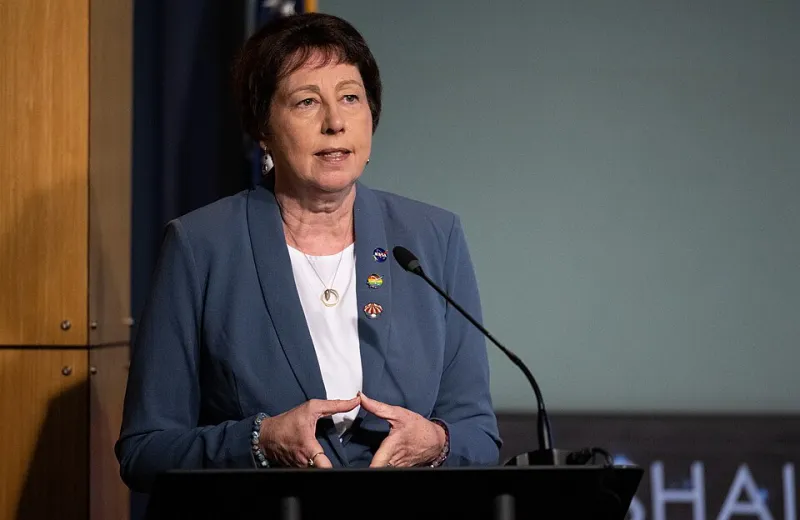
Photo: NASA Headquarters / NASA/Joel Kowsky, Public domain, via Wikimedia Commons
The assumption many Americans carry into the European volunteer application process is one of humility: that they are asking for an opportunity, that they are the ones with something to prove, and that their lack of EU citizenship or local language fluency places them at a structural disadvantage. That assumption, it turns out, is frequently wrong.
Across the European Union, a growing number of nonprofit organizations are not simply open to American volunteers—they are actively designing recruitment strategies to attract them. The reasons are specific, practical, and rooted in organizational need rather than cultural sentiment. Understanding those reasons transforms how American applicants should approach the selection process.
Why American Volunteers Represent a Strategic Asset
European nonprofits operate in a complex funding environment. Many rely on a combination of EU institutional grants, national government support, and private philanthropy—and that third category is where American volunteers become particularly valuable.
US-based philanthropic networks, foundations, and individual donors represent an enormous pool of international giving that most European organizations have limited capacity to access on their own. An American volunteer who arrives with existing relationships in the US nonprofit sector—or who can credibly represent the organization's work to an American audience—effectively functions as a bridge to funding sources that would otherwise remain out of reach.
This dynamic is especially pronounced among organizations working in areas with strong US donor interest: refugee integration, environmental conservation, youth development, and global health. For these nonprofits, an American volunteer with even modest fundraising experience or professional connections carries a value that extends well beyond the hours they contribute on the ground.
The Skills Gap That American Volunteers Help Fill
Beyond fundraising connections, European organizations frequently identify specific technical and professional skills that are more prevalent—or differently developed—among US-trained candidates.
Digital communications and marketing. American volunteers with backgrounds in social media strategy, content creation, email marketing, and digital fundraising platforms often arrive with fluency in tools and methodologies that smaller EU nonprofits are still working to adopt. The US nonprofit sector's early and extensive investment in digital engagement has produced a generation of practitioners whose skills translate directly into organizational capacity for European partners.
English-language content production. English functions as the de facto international language of the nonprofit sector, and organizations seeking to expand their visibility beyond their home country consistently need high-quality English-language materials. American volunteers, as native speakers, can produce grant narratives, donor communications, website copy, and social media content that carries an authenticity that non-native speakers cannot replicate.
Cross-sector professional experience. The American professional culture of career mobility—moving between the private sector, public service, and nonprofit work—means that many US volunteers arrive with experience that European candidates in comparable age brackets may not yet have. A 28-year-old American volunteer who has worked in both a corporate environment and a community organization brings a perspective that is genuinely uncommon in many EU volunteer pools.
Perspective as Organizational Value
European nonprofits working on continent-wide or global issues also seek American volunteers for reasons that are less about skills and more about viewpoint. Organizations focused on transatlantic policy issues, international migration, climate diplomacy, or global health governance find that having US-perspective voices within their volunteer teams enriches their analysis, strengthens their external communications, and provides a check against the kind of regional insularity that can narrow organizational thinking.
This is particularly true of Brussels-based organizations and EU-level advocacy groups, where the ability to contextualize European policy developments within a broader international frame is a genuine professional asset.
What This Means for Your Application
If European nonprofits are actively seeking American volunteers for these reasons, the implication for applicants is clear: the selection process rewards candidates who demonstrate awareness of these organizational needs and who articulate their value in those specific terms.
A generic application that emphasizes enthusiasm and a desire for personal growth is unlikely to distinguish itself in a competitive field. An application that identifies what the organization is trying to accomplish, explains how the applicant's particular background addresses a specific gap, and demonstrates familiarity with the organization's work will stand out in ways that matter to selection committees.
Concrete strategies for American applicants include:
Lead with transferable professional value. Rather than framing your application around what you hope to learn, open with what you bring. If you have fundraising experience, quantify it. If you have managed social media accounts for a US nonprofit, specify the audience size and engagement metrics. European organizations evaluating international candidates are making resource allocation decisions, and they respond to evidence.
Reference your US network explicitly. If you have professional or personal connections to US-based foundations, donor communities, or advocacy networks that are relevant to the organization's mission, say so directly. This is not bragging—it is information that helps the organization assess whether you represent an opportunity they would be foolish to pass up.
Demonstrate knowledge of EU context. One of the most common weaknesses in American applications to European organizations is an insufficient engagement with the European dimension of the work. Applicants who can discuss relevant EU policy frameworks, reference the organization's recent initiatives, or demonstrate awareness of the regulatory and cultural environment in which the nonprofit operates signal a seriousness of purpose that distinguishes them from candidates who are primarily interested in the travel dimension of the placement.
Propose a specific contribution. The most compelling applications often include a brief, concrete proposal: a communications project the volunteer could lead, a donor cultivation strategy they could help implement, or a training they could facilitate. This approach demonstrates initiative, reduces the organization's perceived risk in selecting an international candidate, and creates a natural basis for the placement discussion.
The Competitive Landscape Has Shifted
It is worth noting that the demand for American volunteers among EU nonprofits has grown meaningfully over the past decade, driven by the increasing internationalization of the European civil society sector and the expansion of platforms that facilitate cross-border volunteer matching. This is not a niche phenomenon—it reflects a structural shift in how European organizations think about talent and capacity.
For Americans who have hesitated to pursue European volunteer opportunities out of concern that they would be at a disadvantage, the evidence suggests a more encouraging reality. The question is not whether European nonprofits want American volunteers. Many of them do, and actively. The question is whether individual applicants understand why—and whether they are making that case effectively in their applications.
Platforms like EU Volunteer Portal are designed to connect American volunteers with the European organizations best positioned to benefit from what they bring. Approaching that connection with strategic clarity, rather than passive hope, is what separates candidates who are selected from those who are not.